Can You Freeze Green Olives? Storage & Freezing Guide
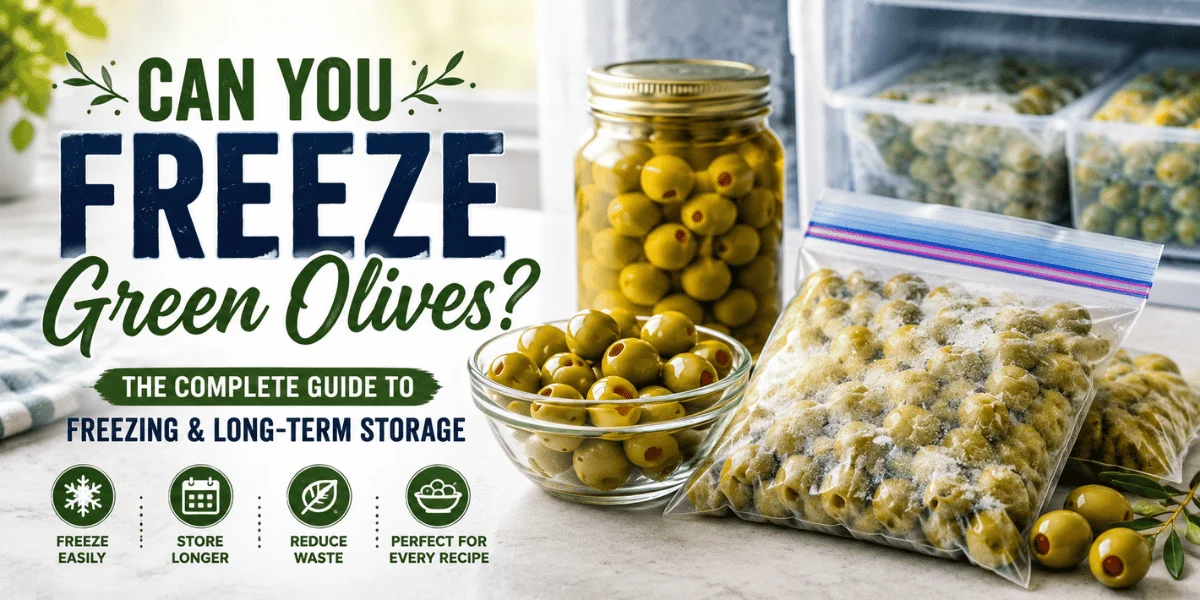
Can You Freeze Green Olives? Complete Guide to Freezing and Long-Term Storage
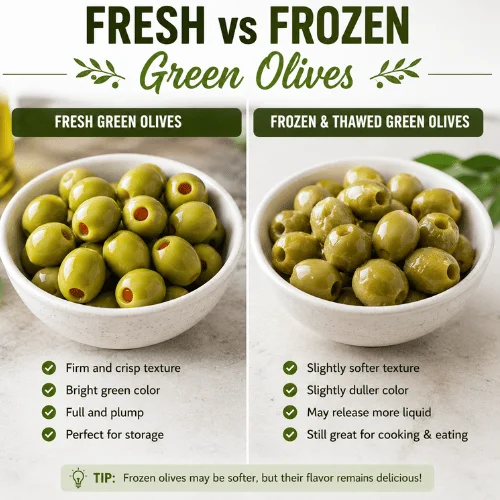
Instead of allowing an open jar of olives in the refrigerator to go bad, you can ask, ” Can you freeze green olives? Yes. You may. If you want to cut down on food waste and always have green olives available, freezing them is a good option. But first, there’s one thing you need to know. Frozen olives won’t be as firm and crunchy as fresh refrigerated ones. They may be thawed and they may taste OK, but their texture may be softer. In this post you’ll learn how to freeze green olives, how to defrost them, how long they last and where to use them after freezing.
How to freeze green olives
Yes, can you freeze green olives? It is a common question, and the answer is yes! Green olives can be frozen if stored properly . Yes . They are generally safe and still work (even after being frozen). It only alters the mouthfeel.
So, can you freeze green olives without losing flavour? Or even less. The salty tart taste is still good enough for cooking, pizza, pasta, tapenade and sauces. The main problem is the texture. Olives can be softer after freezing and thawing due to the water they contain.
How do you freeze fresh olives? ** Many people also inquire how do you freeze fresh olives? Fresh, uncured olives are not the same as jarred or brined olives. In their natural form, olives are quite bitter and require curing before they are palatable. If your olives are straight from the tree, you need to cure them first. This article is mostly about green olives already cured and put in jars, cans or brine.
Another frequently requested topic is what if you freeze olives? This causes ice crystals to form inside the olive. When the olives thaw, the crystals melt and may soften the inside. This is why frozen olives aren’t wonderful eaten straight from the bowl, but are just acceptable cooked.
Stuffed olives freeze well, too. If you are wondering whether to freeze stuffed green olives, it depends on the stuffing. Stuffed olives with pimento freeze better than stuffed olives with cheese. Cheese fillings might be watery or grainy when thawed.
The Benefits of Freezing Green Olives
There are a few benefits to freezing olives, especially if you purchased a big jar or opened more than you will need. Freezing olives is a terrific way to save money, reduce waste and have olives on hand for future meals.
Why do we freeze green olives? Simple reason for that: they aren’t always used fast. Perhaps you wanted a few for a salad, a pizza, or a party platter. Then the jar goes in the refrigerator. Freezing gives you more time to use them up before they spoil.
Another bonus is that the olives can be stored for a long time. Frozen green olives are a terrific addition for quick dinners if you prepare a lot. You may use them in pasta and rice dishes, chicken recipes, sauces and baked foods without having to buy a new jar every time.
Another method to keep green olives without brine is to freeze them. Brine is fantastic because it keeps the olives moist and salty, but not everyone wants to keep them in liquid. If you drain them and wrap them in an air-tight container, you can still keep olives in the freezer. Just be sure to get all the air out so they don’t suffer freezer burn.
Once you know green olives can be frozen, you can plan better. Don’t discard half-used jars, just divide olives into portions and freeze for later.
How To Freeze Green Olives Properly (Step-By-Step Instructions)
Can You Freeze Green Olives? Yes, but you have to freeze them properly. Olives that are packed badly may be dry, cold or tasteless. For optimal results, follow this step-by-step freezing olives method.
Freezing Olives
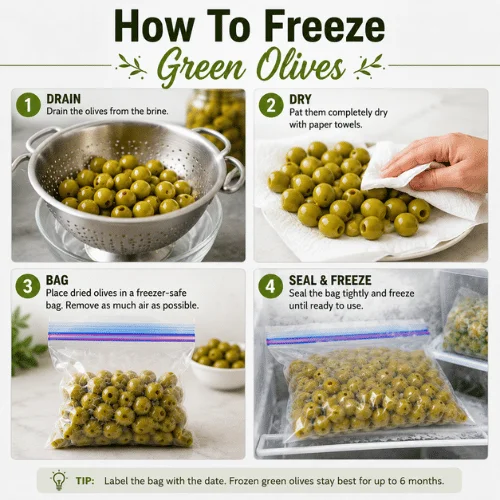
First, check out the olives. If olives smell bad, are slimy or mouldy, do not freeze them. Freezing doesn’t save bad food.
If they are in brine, drain the olives. If they are excessively salty, rinse lightly. This step can be useful if you wash your olives before freezing them. “Don’t soak too long or you can lose too much flavour.”
Wondering how to clean fresh olives ? Rinse under cool water and remove any leaves, stems or damaged portions. But remember, fresh raw olives generally need to be cured before they can be eaten or frozen.
Rinse and pat the olives dry with paper towels. ** Drying olives for storage ** to get rid of surplus ice. The drier it is outside, the better the texture might be after freezing.
They can be cut up, diced or frozen whole. Whole olives are more stable. The olives are sliced for convenience in subsequent use in pizza, spaghetti and salads.
Choosing the Right Storage Container
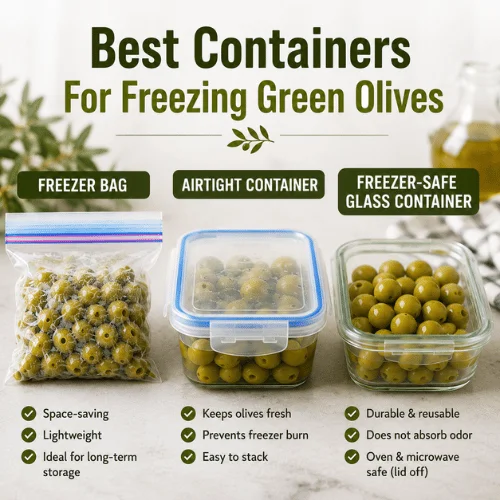
Choosing the finest container for freezing olives is important. Use freezer-safe bags, small airtight containers or freezer-safe glass containers. Do not store in thin plastic bags that may tear or cause freezer burn.
** Freezer bags for olives** are useful, because you can squeeze out the excess air before sealing. Less air, greater quality” If you use a container, be sure it is well sealed. Store olives in an airtight container to prevent them from freezing and absorbing freezer odours.
Also, freeze small quantities of olives. Then you just thaw what you need to. Repeated freezing and thawing might make it difficult to eat.
If freezing olives in brine, leave some headspace in the container. Water expands as it freezes. Container may crack or leak if overfilled.
Label & Date
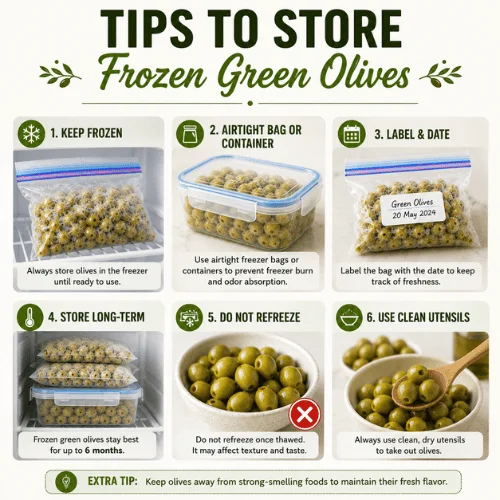
Mark each bag or container with the date. This helps you keep track of the olive expiration date in fridge storage. It also spares you the months down the road when an old bag is questioning if it is still good.
Many people wonder, how long do olives last in the freezer? Best quality in 3 months. They can remain viable for up to 6 months, but flavour and texture can deteriorate over time.
The shelf life of frozen olives relies on the quality of the packaging. Better to store in an airtight container. If you notice substantial freezer burn, smell anything nasty, or see a very mushy texture, it’s better not to use them.
Some people ask, ” Can you freeze green olives for a year? “Frozen food has a long shelf-life theoretically, but the problem is quality. If the freezer temperature is kept within safe limits, it will remain safe until the end of the time period. 3-6 months is a better range for taste/texture.
Best practices for defrosting olives
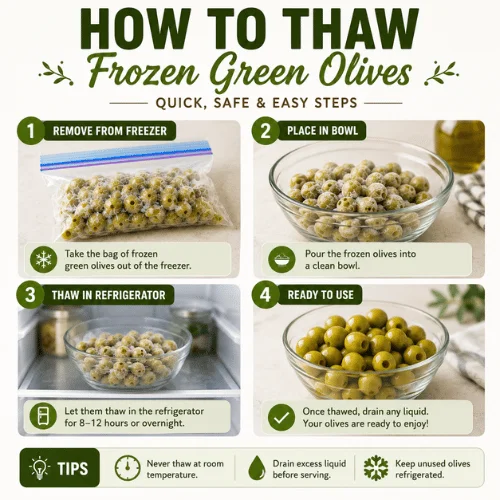
Many people ask, “Can you freeze green olives?” but they forget what to do next: defrost them correctly. Proper thawing preserves flavour and texture.
The safest way to thaw olives is in the refrigerator. Put the frozen olives in a bowl or container and let them sit overnight. This is the easiest technique to safely thaw green olives.
If you’re wondering how to thaw frozen olives, don’t simply leave them out on the counter for hours. If olives are stuffed or mixed with other ingredients, thawing at room temperature may compromise food safety.
To unfreeze olives, place the sealed freezer bag in a bowl of cold water to speed things up. Avoid using boiling water. The olives may be softened in hot water, which may also affect the stuffing in stuffed olives.
Thaw and drain off excess liquid. If you intend to use them in a salad or on pizza, dry the olives off. If they are too soft for you, use them in cooked meals.
When thawed, keep olives in the refrigerator and use within a few days.
Tips for Frozen Olives
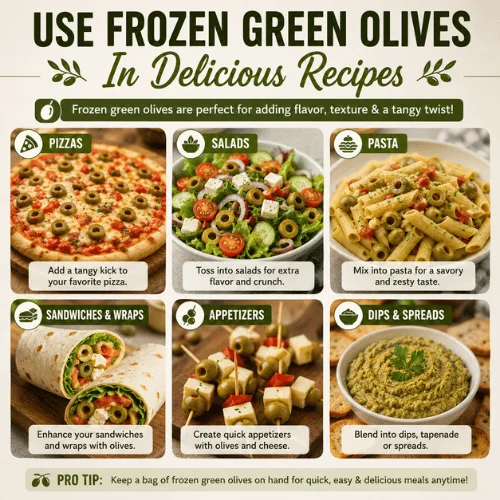
Frozen olives are not often a wonderful snack, but they are quite useful in dishes. If you prefer ** cooking with frozen olives ** include them into several of the quick recipes.
Some amazing Uses for Frozen Olives and Recipes include:
- Pasta with diced olives, garlic, herbs and EVOO
- Slices of green olives for homemade pizza
- Lemon, herb and olive chicken
- Olive tapenade spread on bread or a sandwich.
- Bowls of rice with olives, feta, cucumber and tomatoes
- Baked fish with tomatoes and olives
- Mediterranean, Wraps
- Soups & hot sauces
One question that’s often asked is can you use frozen olives on pizza? Yes, however, it is best to thaw them and drain them. When you put frozen olives straight on a pizza, they can lose water during baking.
Frozen olives can be used in a salad, but be aware that they may be softer in texture. Combine with crunchy things like cucumber, onion, lettuce or peppers for fresh salads. This helps make the texture smooth.
The answer to what goes with olives is simple. Olives work well with bread, cheese, tomatoes, pasta, chicken, fish, rice, eggs and roasted vegetables. If you are looking for what to eat with olives or what to pair them with, pair them with mild meals, as olives already have a salty taste.
One of the best things you can do with defrosted olives is prepare a tapenade spread. Mix together the olives, olive oil, garlic, lemon juice and spices. The olives are blended, thus the softer texture is no longer a problem.
Also, several individuals are asking about the nutritional value of an olive. Green olives are generally low in carbohydrates, healthy fats, salt and small amounts of vitamins and minerals. But they can be high in salt, especially if they are brined.
Another common search is whether green or black olives are healthier. Both are part of a well-balanced diet. Black olives tend to be softer, green ones are usually more bitter and tougher. The nutritional value of olives, green versus black, is affected by curing, packing liquid, salt content, and serving size. If you’re wondering which is better, black or green olives, check the sodium and any other substances on the label.
Concluding Remarks
Yes, you can freeze green olives, and it is a smart way to reduce food waste and keep olives available for future meals. The key is to drain them, dry them well, store them in airtight freezer-safe packaging, and thaw them safely in the refrigerator.
Frozen green olives may become softer after thawing, so they are usually better for pizza, pasta, sauces, salads, tapenade, and cooked dishes rather than fresh snack bowls. For the best quality, use frozen olives within 3 to 6 months.
Now you know how long green olives last and how to keep them secure. Unopened olives can be stored in the cupboard, but opened green olives must be refrigerated. Cover with brine, use a clean spoon and close the lid tightly.
If olives smell bad, are rotten, feel slimy, or the jar is bulging, don’t risk it. Burn them up. Proper storage keeps your olives fresh, tasty and safe for your next meal.